Key takeaways
- Architecture: The 7800X3D uses Zen 4; the 9800X3D moves to Zen 5, which delivers a meaningful instructions-per-clock uplift on top of the shared 96MB L3 cache pool.
- Clock speeds: The 7800X3D runs 4.2GHz base and 5.0GHz boost. The 9800X3D pushes to roughly 4.7GHz base and 5.2GHz boost — a gap that widens under sustained all-core load.
- Cache placement: AMD moved the second-generation 3D V-Cache underneath the compute die on the 9800X3D. The cores now sit closer to the cooler, which means better thermals and no clock penalty.
- Overclocking: The 7800X3D is multiplier-locked, leaving only Precision Boost Overdrive and Curve Optimizer. The 9800X3D is fully unlocked — the first X3D chip you can genuinely overclock.
- Gaming performance: Expect roughly 8–12% higher average frame rates from the 9800X3D at 1080p, stretching past 20% in cache-and-clock-sensitive titles like flight sims, MMOs and large-scale strategy games.
- Productivity: This is the widest gap. Zen 5 plus higher sustained clocks gives the 9800X3D a 15–20% lead in rendering, compilation and encoding workloads.
The Ryzen 7 9800X3D and Ryzen 7 7800X3D are, between them, responsible for most of the highest frame rates recorded on a desktop PC over the last three years. Both are eight-core, sixteen-thread AM5 chips built around AMD’s 3D V-Cache technology — a stacked slab of L3 cache that keeps game engines fed with data instead of leaving them waiting on system memory. In 2026, with GPUs fast enough to expose CPU bottlenecks even at 1440p, picking the right one of these two has a measurable effect on your minimum frame rates.
The newer 9800X3D is the faster chip in every measurable way, but the older 7800X3D refuses to go quietly: it remains widely available, frequently discounted, and bundled into motherboard combos that undercut a standalone 9800X3D by a wide margin. This comparison breaks down where the performance gap actually shows up, where it doesn’t, and which chip belongs in your build.
Our top picks
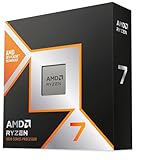
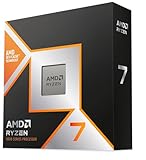
 AMD Ryzen 7 7800X3D 8-Core
- Product Group: Personal Computer
- Binding: Personal Computers
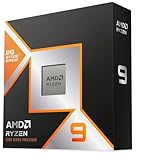
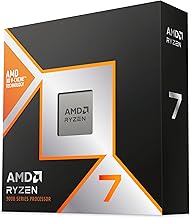
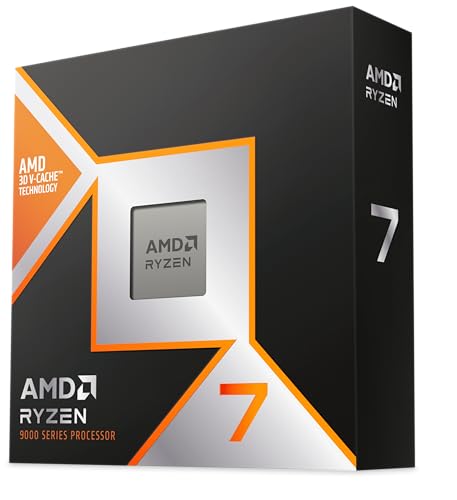 AMD RYZEN 7 9800X3D 8-Core
- Product Group: Personal Computer
- Binding: Personal Computers



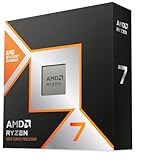
 AMD Ryzen™ 7 9700X 8-Core
- Product Group: Personal Computer
- Binding: Personal Computers
As an Amazon Associate we earn from qualifying purchases at no extra cost to you. Ratings are shown as listed on Amazon.
⚡ Save on Your Next PC — Amazon Prime
Prime members get fast free shipping on the systems above, plus early access to Prime Day & Black Friday PC deals. New members get a 30-day free trial.
Watch: Ryzen 7 9800X3D vs 7800X3D: Upgrade in 2026? — Video Review
Quick Verdict
Buy the Ryzen 7 9800X3D 8-Core, 16-Thread Desktop Processor if you’re building a high-refresh gaming rig around a current flagship GPU, play CPU-heavy simulation or strategy titles, or want an unlocked chip you can tune and keep for years. Buy the Ryzen 7 7800X3D 8-Core, 16-Thread Desktop Processor — ideally as part of a Micro Center 7800X3D and GIGABYTE B850 Gaming WF or B650 AORUS Elite AX ICE combo — if you want roughly 90% of the gaming performance for substantially less money, particularly at 1440p and 4K where the GPU does most of the limiting.
Key Differences
- Architecture: The 7800X3D uses Zen 4; the 9800X3D moves to Zen 5, which delivers a meaningful instructions-per-clock uplift on top of the shared 96MB L3 cache pool.
- Clock speeds: The 7800X3D runs 4.2GHz base and 5.0GHz boost. The 9800X3D pushes to roughly 4.7GHz base and 5.2GHz boost — a gap that widens under sustained all-core load.
- Cache placement: AMD moved the second-generation 3D V-Cache underneath the compute die on the 9800X3D. The cores now sit closer to the cooler, which means better thermals and no clock penalty.
- Overclocking: The 7800X3D is multiplier-locked, leaving only Precision Boost Overdrive and Curve Optimizer. The 9800X3D is fully unlocked — the first X3D chip you can genuinely overclock.
- Gaming performance: Expect roughly 8–12% higher average frame rates from the 9800X3D at 1080p, stretching past 20% in cache-and-clock-sensitive titles like flight sims, MMOs and large-scale strategy games.
- Productivity: This is the widest gap. Zen 5 plus higher sustained clocks gives the 9800X3D a 15–20% lead in rendering, compilation and encoding workloads.
AMD Ryzen 7 9800X3D: The Performance Pick
The 9800X3D is the chip AMD should have shipped first. By flipping the cache stack beneath the cores, AMD removed the thermal ceiling that forced the previous generation to run conservative clocks. The result is a processor that behaves like a normal high-end Ryzen part under heavy multithreaded load while retaining the enormous cache advantage in games. It’s also fully unlocked, so enthusiasts with capable cooling can push it further rather than settling for undervolting.
The trade-offs are real but modest. It draws more power and runs warmer than the 7800X3D under all-core stress, so plan on a substantial dual-tower air cooler or a 240mm-plus AIO. It also carries a firm price premium, and if you play at 4K with a mid-tier GPU, much of that premium buys frame rates your graphics card will never reach. Where it earns its keep is in 1% lows — the stutter-free consistency that makes a 240Hz monitor feel worth owning.
AMD Ryzen 7 7800X3D: The Value Champion
Three years on, the 7800X3D is still faster in games than almost every non-X3D CPU on the market, and it does it while sipping power — real-world gaming draw often sits in the 50–80W range, which keeps case temperatures and cooler requirements low. Bundles like the 7800X3D with Cooler Master Hyper Spectrum V3 120mm PWM air cooler exist precisely because the chip doesn’t demand exotic cooling.
Its best argument in 2026 is total build cost. The Micro Center 7800X3D and GIGABYTE B850 Gaming WF combo pairs it with a modern AM5 board featuring DDR5, PCIe 5.0, Gen 5