Key takeaways
- Class-leading 1080p and high-refresh gaming performance
- New under-die cache design runs cooler and clocks higher than the 7800X3D
- First X3D chip that ships fully unlocked for overclocking
- Drops into the long-lived AM5 platform with a BIOS update
The AMD Ryzen 7 9800X3D is the eight-core, sixteen-thread flagship of the Zen 5 gaming lineup, built on AMD’s second-generation 3D V-Cache. The big architectural change this time is that the stacked cache now sits beneath the compute die rather than on top, which lets the chip clock higher and run cooler than the 7800X3D it replaces while keeping the enormous L3 pool that makes X3D parts so fast in games.
This is a processor for people who care most about frame rates: competitive players chasing high refresh rates, sim and strategy fans whose games lean on cache, and anyone building a high-end gaming rig around an RTX 5070 Ti or better. It’s less obviously the right call for pure productivity users, who may get more raw multi-core value elsewhere, but for a gaming-first build it is the part to beat.
Our top picks
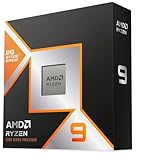
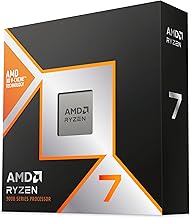
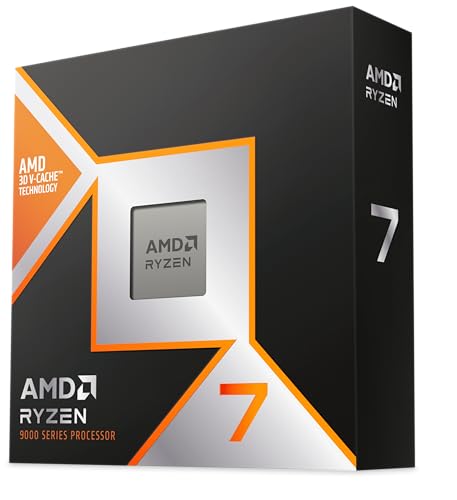 AMD RYZEN 7 9800X3D 8-Core
- Product Group: Personal Computer
- Binding: Personal Computers
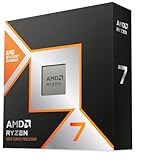
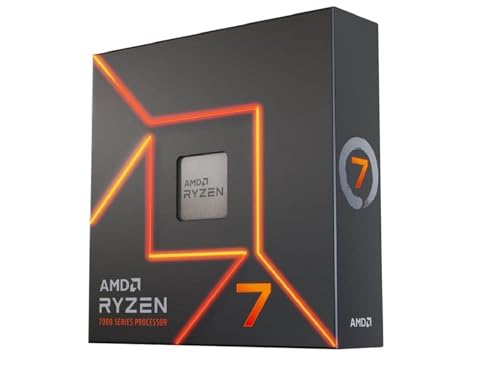
 AMD Ryzen 7 7800X3D 8-Core
- Product Group: Personal Computer
- Binding: Personal Computers


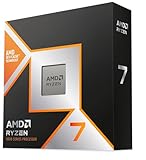
 AMD Ryzen™ 7 9700X 8-Core
- Product Group: Personal Computer
- Binding: Personal Computers
As an Amazon Associate we earn from qualifying purchases at no extra cost to you. Ratings are shown as listed on Amazon.
⚡ Save on Your Next PC — Amazon Prime
Prime members get fast free shipping on the systems above, plus early access to Prime Day & Black Friday PC deals. New members get a 30-day free trial.
Watch: Ryzen 7 9800X3D Review — Video Review
Design & Build
The 9800X3D uses the standard AM5 socket, so it drops into existing 600-series boards after a BIOS update and keeps AMD’s promised platform longevity. The redesigned V-Cache placement is the headline: putting the cache die below the cores improves thermal transfer, which is why this is the first X3D chip AMD ships fully unlocked for overclocking. It has a 120W TDP and runs hotter than a non-X3D 9700X under load, so a quality 240mm or larger AIO is the sensible pairing rather than a budget air cooler.
Performance
In gaming the 9800X3D is consistently at or near the top of the charts, and crucially it no longer trails the standard Zen 5 parts in lightly threaded or productivity work the way earlier X3D chips sometimes did. The higher clocks close that gap, so you get class-leading gaming performance without a meaningful compromise in day-to-day responsiveness.
Where expectations need tempering is value and multi-core throughput. For heavy rendering, code compilation, or streaming-plus-gaming workloads, a 12- or 16-core chip will finish faster, and at 1440p or 4K with a mid-tier GPU you may be bottlenecked by the graphics card long before the CPU matters. The gains are real but most visible at high frame rates and CPU-bound settings.
Pros & Cons
- Class-leading 1080p and high-refresh gaming performance
- New under-die cache design runs cooler and clocks higher than the 7800X3D
- First X3D chip that ships fully unlocked for overclocking
- Drops into the long-lived AM5 platform with a BIOS update
- Premium price over the still-excellent 7800X3D
- Only eight cores, so heavy multi-core workloads favor higher-core chips
- Runs warm enough to want proper liquid or high-end air cooling
Alternatives to Consider
If the price stings, the previous-generation Ryzen 7 7800X3D remains a superb gaming chip for noticeably less money. Builders who need serious multi-core muscle alongside gaming should step up to the Ryzen 9 9950X3D or the twelve-core Ryzen 9 9900X3D. And if 3D V-Cache isn’t a priority, the standard Ryzen 7 9700X delivers most of the Zen 5 experience at a lower cost.
Frequently Asked Questions
Is the 9800X3D worth upgrading from a 7800X3D?
For most people, no. The 7800X3D is still one of the fastest gaming chips available, and the generational gaming uplift is modest. The upgrade makes more sense coming from an older Ryzen or Intel platform.
What cooler do I need?
Because it clocks higher and draws up to 120W, plan for a strong dual-tower air cooler or a 240mm-plus liquid cooler to keep boost clocks sustained.
Do I need a new motherboard?
No. It uses AM5, so most existing 600-series boards support it after a BIOS update, though a current B650 or X870 board makes setup simpler.
Is it good for productivity, not just gaming?
It handles everyday and moderate creative work well, but for sustained rendering or compilation a higher-core Ryzen 9 will be meaningfully faster.
Verdict
The Ryzen 7 9800X3D is the clearest choice for a no-compromise gaming CPU in 2026. The reworked cache design fixes the old X3D trade-offs by adding clock speed and overclocking headroom without losing the cache advantage, giving you top-tier frame rates and solid all-round performance. It’s expensive, and multi-core specialists have better options, but for a gaming-first AM5 build it earns its place at the top.