Our Top Picks
 La Crosse 911-65557-INT Portable Digital Battery TesterCompact3.53 x 1 x 0.98 inches0.1 poundsCheck on Amazon
The real decision with a small-battery tester is not whether it can touch a battery. It is whether the reading means anything when you act on it. A drawer full of loose AA and AAA cells, coin cells for controllers and a few 9V blocks for alarms leaves most people guessing, and guessing either throws away good cells or strands a dead one in a device you actually need.

This shortlist is for households sorting loose cells, gamers checking controller batteries, and anyone who keeps spare coin cells for remotes, scales and key fobs. Every tester below is a handheld checker for small household batteries, and the picks were taken from the sizes and readout details printed on their Amazon listings.
Quick Picks
As an Amazon Associate we earn from qualifying purchases.
| Product | Best for | Key spec from title |
|---|---|---|
| Dlyfull Universal Battery Tester (B2) | A numeric voltage readout for many cell types | LCD display checker for AA AAA C D 9V and button cells |
| La Crosse 911-65557-INT Portable Digital Battery Tester | Pocket-size checks with a digital voltage figure | Portable digital tester for alkaline, rechargeable and 3V button cells |
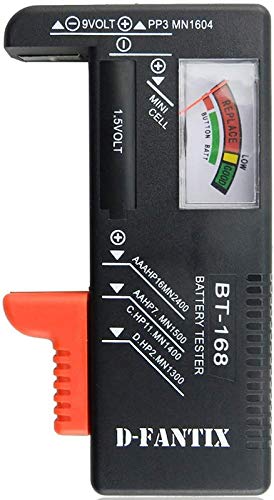
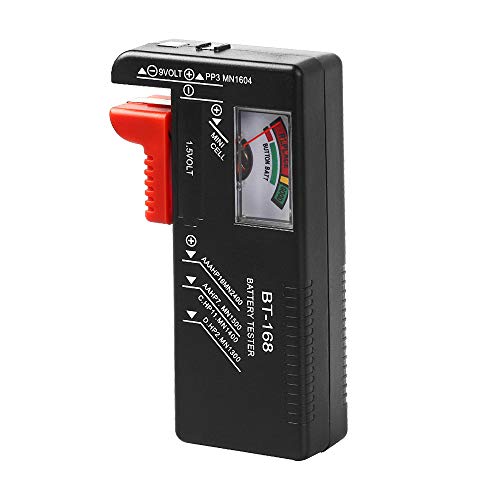
| D-FantiX Battery Tester BT-168 | The simplest possible good-or-replace answer | Analog checker for AAA AA C D 9V and 1.5V button cells |
| VTECHOLOGY Battery Tester BT-168 | A no-battery-needed tester for a second drawer | Model BT-168 checker that requires no battery for operating |
How to Choose
Decide between a voltage number and a color zone
Testers report results two ways. Analog models like the BT-168 use a needle over printed zones, so the answer is a quick good, low or replace judgment. Digital models show an actual voltage figure on an LCD, which lets you compare two cells against each other and spot the weaker one of a pair. If you only sort cells into keep and toss piles, a needle is fast enough. If you match cells for a controller or camera, or you want to watch a rechargeable fade over time, pay for the number.
Count the sizes you actually own before buying
Listings advertise long compatibility strings, but the useful question is narrower: which cells sit in your drawer right now? Most households need AA, AAA and a CR2032-style coin cell slot, plus 9V for alarms and C or D for a few torches and toys. A tester that skips the button-cell slot will annoy you the first time a remote dies. Check the listing for the exact sizes named, including the less common N size if you own anything that uses it, rather than trusting a headline that says universal.
Check whether the tester needs its own battery
Some testers draw power from the cell being tested, so they work after years in a drawer with nothing to maintain. Others, including many LCD models, need their own AAA cell to run the display, which is a small irony worth knowing before you buy: the day you most want the tester is the day its own battery may be flat. Listings state what is included, and the Dlyfull below ships with the AAA it needs. Decide which trade-off suits where the tester will live.
Match the tester to disposable or rechargeable habits
Alkaline and rechargeable cells live at different voltages, and a good tester respects that. A rechargeable AA sits lower at full charge than a fresh alkaline, so a tester with a single fixed scale can mark healthy rechargeables as weak. Models that let you select the chemistry or voltage range, like the La Crosse in this list, read both families fairly. If your house runs on rechargeables for controllers and handhelds, that selector matters more than any other feature on the page.
The 4 Best Options
Dlyfull Universal Battery Tester (B2)
This is the pick for anyone who wants a number instead of a needle. The LCD shows the voltage of the cell under test, and the listing covers the widest spread in this roundup: the everyday AA, AAA, C and D sizes, 9V blocks, and the photo and button cells that simpler testers skip. It needs one AAA battery of its own to run, and the listing includes that cell in the box, so it works the day it arrives.
Specs
- LCD display with a voltage readout
- Tests AA, AAA, C, D and 9V batteries
- Tests CR2032, CR123A, CR2, CRV3, 2CR5 and CRP2 cells
- Tests 1.5V and 3V button cells
- Runs on 1 AAA battery, included in the box
Best for: Matching cells and judging rechargeables, where the actual voltage figure matters.
Watch out for: The tester itself needs an AAA battery, so keep a spare with it.
ASIN: B07DPLD6KB
La Crosse 911-65557-INT Portable Digital Battery Tester
La Crosse builds weather gear, and this pocket tester follows the same plain, functional pattern. It shows a digital voltage reading and, unusually for this class, asks you to select the voltage family first, with settings for 1.5V alkaline, 1.2V rechargeable and 3.0V lithium button cells. That selector is why it reads rechargeables honestly instead of marking them low. It is powered by the battery being tested, weighs barely an ounce, and suits a kit bag or a glovebox as much as a kitchen drawer.
Specs
- Digital display showing the tested voltage
- Selectable 1.5V, 1.2V and 3.0V ranges
- Tests AAA, AA, C, D and N alkaline cells
- Tests rechargeable AAA, AA, C, D and N cells
- Tests 3V lithium button cells and 9V batteries
- Powered by the battery under test; weight 1.13 ounces
Best for: Households mixing alkaline and rechargeable cells that want one honest readout for both.
Watch out for: You must pick the right voltage range before testing, or the reading will mislead you.
ASIN: B09RY58YJ5
D-FantiX Battery Tester BT-168
The BT-168 pattern is the classic sliding-arm checker, and the D-FantiX version is the straightforward way to buy it. You rest the cell against the contacts, slide the red arm until it grips, and read the needle against the printed scale. There is no battery inside the tester and nothing to set up, which is exactly why this design has survived for years. It covers the standard household sizes and the small button cells, and the whole answer takes about three seconds per battery.
Specs
- Analog needle with a printed good, low and replace scale
- Tests 9V batteries
- Tests 1.5V AA, AAA, C and D cells
- Tests 1.5V button and mini cells
- Requires no battery of its own to operate
- Model BT-168
Best for: Fast drawer sorting, where good-or-replace is the only question being asked.
Watch out for: The needle gives a zone, not a voltage, so it cannot rank two close cells against each other.
ASIN: B014FEM0X6
VTECHOLOGY Battery Tester BT-168
This is the same proven BT-168 layout sold under the VTECHOLOGY name, and its role in a house is simple: it is the second tester. One lives with the battery drawer, this one lives in a toolbox, a car kit or a holiday box, because a tester you cannot find when a device dies is no tester at all. It needs no battery of its own, reads the common sizes plus button cells, and asks for no setup beyond sliding the arm to fit the cell you are holding.
Specs
- Analog meter with color-coded zones
- Tests AA, AAA, C and D 1.5V batteries
- Tests 9V batteries
- Tests 1.5V button cells
- Requires no battery for operating
- Model BT-168
Best for: A cheap second tester for a toolbox, car kit or travel bag.
Watch out for: As with any needle tester, borderline cells land in a judgment zone rather than a precise figure.
ASIN: B07KJLBN2H
Which One Fits Your Situation
You are sorting a drawer of mixed loose cells
Start with the D-FantiX BT-168. Speed is the whole job here: grip, glance, sort. You will move through dozens of cells in minutes and end with a good pile and a recycling pile. If several cells land in the borderline zone and you cannot decide, that is the moment a digital model earns its place as a follow-up check.
You run controllers and handhelds on rechargeables
Choose the La Crosse. Its 1.2V range setting reads a healthy rechargeable at its real level instead of comparing it against an alkaline scale, which is the mistake that makes people retire good cells early. The Dlyfull is the alternative if you also need the photo-cell sizes that the La Crosse does not list.
You need coin and photo cells covered too
The Dlyfull B2 is the only tester in this list whose listing names the CR123A, CR2 and CRV3 family alongside the household sizes. If your house has cameras, rangefinders or older electronics using those cells, that coverage decides the purchase on its own, and the included AAA means it works straight out of the box.
Common Mistakes
- Testing a rechargeable on an alkaline scale and throwing it away for reading low.
- Buying a tester with no button-cell slot when remotes and scales are what actually die.
- Forgetting that some LCD testers need their own battery, which can be flat when needed.
- Testing cells straight off the charger or straight out of a device, before they have rested.
- Mixing a strong cell with a weak one in the same device after sorting only half the set.
Frequently Asked Questions
Can these testers check rechargeable batteries?
Yes, with a caveat. Any of them will show a reading for a rechargeable cell, but the interpretation differs: a full rechargeable AA sits at a lower voltage than a fresh alkaline. The La Crosse in this list has a dedicated 1.2V range for rechargeables, which is why it is the safer pick if rechargeables are most of what you test.
Why does a tester show a good reading but the device still fails?
A simple tester measures voltage with little or no load, and a tired cell can show a respectable voltage yet collapse when a device draws real current. Treat a borderline reading as a warning rather than a pass, and test cells as a set, because one weak cell in a pair is enough to stop many devices.
Do I need a tester that runs on its own battery?
Only if you want an LCD voltage readout. Needle testers and the La Crosse draw their power from the cell being tested, so they never need maintenance. LCD models like the Dlyfull need a small battery of their own, included in its box. The trade is precision for upkeep, and either choice is reasonable.
Which sizes matter most for a gaming household?
AA and AAA cover most controllers and remotes, and a CR2032 slot covers the coin cells in accessories, scales and spare fobs. Add 9V if you have alarms or a multimeter habit, and C or D only if a torch or toy in the house still uses them. Buy for the cells you own, not the longest list.
FAQ
Can these testers check rechargeable batteries?
Why does a tester show a good reading but the device still fails?
Do I need a tester that runs on its own battery?
Which sizes matter most for a gaming household?
More from Amazon
Programs that pair well with the guide above. Offers and eligibility are set by Amazon and may change.
Free shipping on eligible items, Prime Video and more. Eligible new members can start with a free trial.
Start a Prime free trialAd-free music streaming. Eligible new subscribers can start with a free trial.
Try Music Unlimited freeA Prime membership for ages 18-24 with a trial period. Eligibility is set by Amazon.
See Prime for Young AdultsAudiobooks and podcasts to listen to on the go. Eligible new members can start with a free trial.
Try Audible freeAs an Amazon Associate we earn from qualifying purchases.