Key takeaways
- Raw performance: The 5070’s 6,144 CUDA cores versus the 5060 Ti’s 4,608 translate into a consistent 20–30% lead at 1440p, growing to 35%+ in heavy ray-traced scenes.
- Memory configuration: The 5070 pairs 12GB GDDR7 with a 192-bit bus (~672 GB/s), while the 5060 Ti runs 8GB or 16GB on a narrower 128-bit bus (~448 GB/s). More capacity, less bandwidth.
- Power and PSU: The 5060 Ti draws around 180W and runs happily on a quality 550W unit from a single 8-pin. The 5070 sits near 250W and wants 650W or more.
- PCIe lanes: The 5060 Ti uses a PCIe 5.0 x8 interface; the 5070 gets the full x16. On older PCIe 3.0 motherboards, the 5060 Ti loses a few percent that the 5070 does not.
- Form factor options: 5060 Ti models skew compact — 2 to 2.5 slots, SFF-ready designs, and even an external Thunderbolt 5 box. 5070 cards are generally longer and thicker.
- Longevity profile: The 5070 ages better on compute; the 16GB 5060 Ti ages better on memory. Which matters more depends on your target resolution.
Nvidia’s Blackwell mid-range has settled into a two-horse race, and it is a closer fight than the naming suggests. The GeForce RTX 5060 Ti — sold in both 8GB and 16GB configurations — anchors the mainstream bracket, while the RTX 5070 sits one rung higher as the cheapest card Nvidia markets as a true no-compromise 1440p GPU. On paper the hierarchy is obvious: more cores, a wider memory bus, more bandwidth. In practice, the 16GB 5060 Ti complicates matters by carrying more VRAM than the pricier card, and that single detail has caused more buyer hesitation than any other spec-sheet line this generation.
The decision matters more in 2026 than it did at launch. Unreal Engine 5 titles running Nanite and Lumen, a growing list of releases with mandatory ray tracing, and 4K texture packs have pushed typical 1440p memory use comfortably past 10GB. At the same time, DLSS 4’s transformer upscaling model and Multi Frame Generation have made raw rasterisation less decisive than it once was — a slower card with a healthy frame buffer can now hold up in scenarios that would have crushed it two years ago. Choosing well means weighing compute against memory headroom, and being honest about the resolution and settings you actually play at.
Our top picks
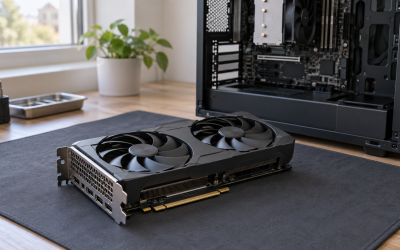
 ASUS Dual NVIDIA GeForce RTX 5060 Ti
- Product Group: Personal Computer
- Binding: Personal Computers


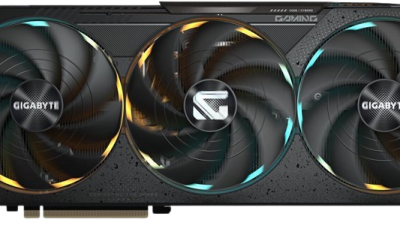
 GIGABYTE GeForce RTX 5070 Ti Gaming OC
- Product Group: Personal Computer
- Binding: Personal Computers


As an Amazon Associate we earn from qualifying purchases at no extra cost to you. Ratings are shown as listed on Amazon.
⚡ Save on Your Next PC — Amazon Prime
Prime members get fast free shipping on the systems above, plus early access to Prime Day & Black Friday PC deals. New members get a 30-day free trial.
Watch: RTX 5060 Ti vs 5070: Which Wins in 2026? — Video Review
Quick Verdict
The RTX 5070 is the better gaming card outright: it delivers roughly 20–30% more performance at 1440p, and the gap widens with ray tracing and path tracing enabled. The RTX 5060 Ti 16GB is the smarter buy if you want maximum texture and VRAM headroom for the money, run local AI or content-creation workloads, or are building in a small case with a modest power supply. The 8GB 5060 Ti should only be considered for 1080p esports and strict-budget builds where the price gap is decisive.
Key Differences
- Raw performance: The 5070’s 6,144 CUDA cores versus the 5060 Ti’s 4,608 translate into a consistent 20–30% lead at 1440p, growing to 35%+ in heavy ray-traced scenes.
- Memory configuration: The 5070 pairs 12GB GDDR7 with a 192-bit bus (~672 GB/s), while the 5060 Ti runs 8GB or 16GB on a narrower 128-bit bus (~448 GB/s). More capacity, less bandwidth.
- Power and PSU: The 5060 Ti draws around 180W and runs happily on a quality 550W unit from a single 8-pin. The 5070 sits near 250W and wants 650W or more.
- PCIe lanes: The 5060 Ti uses a PCIe 5.0 x8 interface; the 5070 gets the full x16. On older PCIe 3.0 motherboards, the 5060 Ti loses a few percent that the 5070 does not.
- Form factor options: 5060 Ti models skew compact — 2 to 2.5 slots, SFF-ready designs, and even an external Thunderbolt 5 box. 5070 cards are generally longer and thicker.
- Longevity profile: The 5070 ages better on compute; the 16GB 5060 Ti ages better on memory. Which matters more depends on your target resolution.
GeForce RTX 5060 Ti: Memory Headroom on a Budget
The 5060 Ti’s appeal rests almost entirely on the 16GB variant. Cards like the ASUS Dual RTX 5060 Ti 16GB OC deliver a quiet, 2.5-slot Axial-tech cooler with 0dB idle behaviour, while the ASUS SFF-Ready Prime 16GB OC adds dual BIOS and dimensions verified against small-form-factor case clearances — genuinely useful if you’re building in a 15-litre chassis. That 16GB buffer means you can run ultra textures, ray-traced global illumination, and heavy mod lists at 1440p without the sudden frame-time spikes that plague 8GB cards in the same scenarios.
The 8GB models occupy a different niche. The GIGABYTE RTX 5060 Ti Gaming OC 8G with its WINDFORCE cooler and the PNY RTX 5060 Ti 8GB Epic-X RGB OC triple-fan are competent 1080p high-refresh cards, and the PNY 8GB Dual-Fan is about as affordable as Blackwell gets — but 8GB is already a limiting factor in several 2025–2026 releases at 1440p. Laptop owners have a third path: the GIGABYTE AORUS RTX 5060 Ti AI Box packages a 16GB card into a Thunderbolt 5 enclosure, turning a thin-and-light into a capable gaming and local-inference machine.
GeForce RTX 5070: The Performance Pick
The 5070 is simply the faster card, and the margin is felt rather than measured. Where the 5060 Ti asks you to drop to Balanced upscaling to hold 1440p/120, the 5070