Key takeaways
- L3 cache: The 9800X3D carries 96MB of total L3 thanks to stacked 3D V-Cache; the 9700X has 32MB. This is the single biggest driver of the performance gap in games.
- Clock speeds: The 9700X boosts higher on paper, which gives it a small edge in some lightly threaded and latency-sensitive desktop tasks. Cache overrides that advantage in almost every game.
- Power and heat: The 9700X is a 65W-class part that runs cool on a modest tower cooler. The 9800X3D is a 120W part that wants a strong dual-tower air cooler or a 240mm+ AIO.
- Overclocking: The 9800X3D was the first X3D chip AMD shipped fully unlocked, so Precision Boost Overdrive and curve tuning are on the table. The 9700X is also unlocked and responds well to a modest all-core tune.
- Productivity throughput: In rendering, compilation, and export workloads the two land within a few percent of each other. Cache helps some simulation and compile tasks, but this is largely a wash.
- Price and availability: The 9800X3D commands a clear premium and is frequently easier to find as part of a bundle than as a standalone tray part.
Two years into AM5’s life cycle, AMD’s eight-core Zen 5 chips are still the default recommendation for most gaming builds — and the decision usually narrows to two processors that look nearly identical on a spec sheet. The Ryzen 7 9800X3D and the Ryzen 7 9700X share the same core count, the same 16 threads, the same Zen 5 architecture, the same AM5 socket, and the same DDR5 and PCIe 5.0 support. The 9700X even clocks higher out of the box. Yet in real games, one of these chips is consistently and substantially faster.
The difference comes down to one thing: second-generation 3D V-Cache. The 9800X3D stacks an extra 64MB of L3 underneath the compute die, tripling the cache pool the CPU can draw on before it has to go out to system memory. Game engines love that. In 2026, with frame-generation and upscaling pushing playable frame rates ever higher, CPU bottlenecks surface far earlier than they used to — even at 1440p — which makes this comparison more consequential than it was a generation ago.
Our top picks
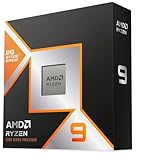
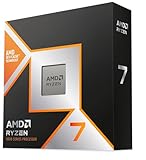
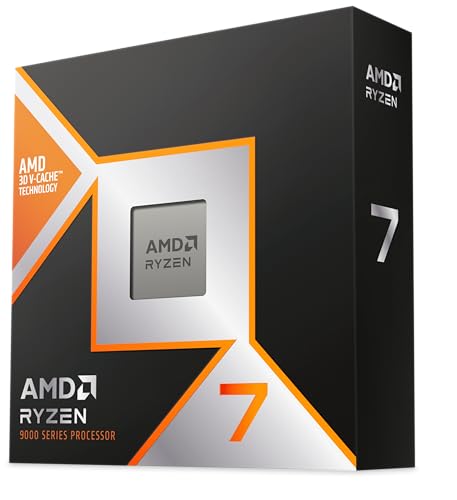 AMD RYZEN 7 9800X3D 8-Core
- Product Group: Personal Computer
- Binding: Personal Computers
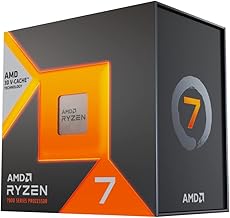
 AMD Ryzen 7 7800X3D 8-Core
- Product Group: Personal Computer
- Binding: Personal Computers


 AMD Ryzen™ 7 9700X 8-Core
- Product Group: Personal Computer
- Binding: Personal Computers
As an Amazon Associate we earn from qualifying purchases at no extra cost to you. Ratings are shown as listed on Amazon.
⚡ Save on Your Next PC — Amazon Prime
Prime members get fast free shipping on the systems above, plus early access to Prime Day & Black Friday PC deals. New members get a 30-day free trial.
Watch: Ryzen 7 9800X3D vs 9700X: 2026 Gaming CPU — Video Review
Quick Verdict
Buy the Ryzen 7 9800X3D if gaming is your primary workload and you’re pairing the CPU with a mid-range or better GPU — it is the faster gaming chip by a wide margin and the safer long-term buy. Buy the Ryzen 7 9700X if your budget is tight, you game at 4K with a card that bottlenecks first, or you want a cool, low-power all-rounder for a mixed work-and-play machine. Neither is a bad chip; they simply serve different priorities.
Key Differences
- L3 cache: The 9800X3D carries 96MB of total L3 thanks to stacked 3D V-Cache; the 9700X has 32MB. This is the single biggest driver of the performance gap in games.
- Clock speeds: The 9700X boosts higher on paper, which gives it a small edge in some lightly threaded and latency-sensitive desktop tasks. Cache overrides that advantage in almost every game.
- Power and heat: The 9700X is a 65W-class part that runs cool on a modest tower cooler. The 9800X3D is a 120W part that wants a strong dual-tower air cooler or a 240mm+ AIO.
- Overclocking: The 9800X3D was the first X3D chip AMD shipped fully unlocked, so Precision Boost Overdrive and curve tuning are on the table. The 9700X is also unlocked and responds well to a modest all-core tune.
- Productivity throughput: In rendering, compilation, and export workloads the two land within a few percent of each other. Cache helps some simulation and compile tasks, but this is largely a wash.
- Price and availability: The 9800X3D commands a clear premium and is frequently easier to find as part of a bundle than as a standalone tray part.
AMD Ryzen 7 9800X3D
The 9800X3D remains the reference point for gaming CPUs. Because AMD moved the cache die beneath the cores rather than on top of them, thermals improved enough to unlock full overclocking while keeping clocks competitive with non-X3D parts. The result is a chip that no longer trades single-thread speed for cache — it simply has both. Expect double-digit percentage leads over the 9700X at 1080p and 1440p in most titles, with the widest gaps in simulation-heavy and open-world games: flight sims, grand strategy, factory builders, competitive shooters at high refresh, and MMOs in crowded zones.
The practical catch is sourcing and cooling. Standalone stock has been inconsistent, so bundles are often the smarter route. The Micro Center 9800X3D with MSI B850 Gaming Plus WiFi combo is the value play — B850 gives you Wi-Fi 7, DDR5, and a Gen5 M.2 slot without paying for features most gamers never touch. The 9800X3D with TUF Gaming X870-PLUS WiFi steps up VRM quality and USB4 connectivity, while the 9800X3D with ASUS ROG Strix X870E-E R2 combo adds five M.2 slots and full PCIe 5.0 lane splitting for people building a genuinely high-end system. Budget for a competent cooler regardless of which board you pick.
AMD Ryzen 7 9700X
The 9700X is the quietly sensible option. It delivers the same Zen 5 IPC and the same eight cores in a package that idles low, sips power under load, and stays cool on inexpensive cooling. For creators, streamers, and general-purpose users who game a few evenings a week, it gives up very little — encode, render, and productivity numbers track the 9800X3D closely, and in a handful of clock-sensitive applications it edges ahead.
Where it loses is precisely where gamers care most: the 1% lows. Without the big cache pool, frame-time consistency in demanding CPU-bound scenes is noticeably worse, and that’s the kind of deficit no GPU upgrade will fix later. If you’re at 4K with a mid-tier card today, that gap may be invisible. If you plan to upgrade the GPU within two years or you chase high-refresh 1440p, it will show up. The savings are real, but so is the ceiling.
Which Should You Buy?
- For high-refresh 1080p/1440p gaming: Pick the 9800X3D. This is the scenario it was built for, and the margin is not subtle.
- For 4K gaming on a mid-range GPU: Pick the 9700X and put the savings into a better graphics card — the GPU will be your limiter anyway.
- For a mixed work and play PC: Pick the 9700X. Productivity parity plus lower power and heat makes it the more balanced daily driver.
- For a compact or quiet build: Pick the 9700X. It’s far easier to cool in small-form-factor cases and low-noise setups.
- For a long-lifespan flagship build: Pick a 9800X3D bundle. Pairing it with an X870 or X870E board gives you the connectivity headroom to keep the platform for years.
Frequently Asked Questions
Is the 9800X3D worth the premium over the 9700X?
For dedicated gaming, yes. The uplift is large enough that most builders are better served buying the X3D chip and trimming elsewhere — RAM speed, case, or storage tier — than saving money on the CPU and regretting it later.
What about the Ryzen 7 7800X3D?
The Ryzen 7 7800X3D is still an excellent gaming CPU and lands close to the 9800X3D in many titles. If you find one well below current 9800X3D pricing and you’re building on a budget AM5 board, it remains a legitimate alternative — just accept slightly lower productivity performance and no overclocking headroom.
Should I wait for the 9850X3D?
The Ryzen 7 9850X3D is the higher-cloc