Key takeaways
- For best value and futureproofing: RX 9060 XT, particularly the 16GB models.
- For ray tracing and DLSS 4: RTX 5060 Ti 8GB is the clear winner.
- For 1440p with high textures: the larger-VRAM 9060 XT avoids memory bottlenecks.
- For streaming and content creation: NVIDIA’s encoder and software ecosystem edge it ahead.
- For pure 1080p raster gaming: both are excellent; buy whichever is cheaper.
The mainstream GPU battle for 1080p and 1440p gamers has a fresh matchup: AMD’s Radeon RX 9060 XT against NVIDIA’s GeForce RTX 5060 Ti 8GB. Both target the enormous middle of the market, where players want smooth frame rates without spending flagship money, and both bring current-generation architectures (RDNA 4 and Blackwell) to the fight.
On paper they trade blows, but the story gets interesting when you factor in memory capacity, ray tracing, upscaling tech, and price. The 8GB framebuffer on this RTX 5060 Ti in particular is a talking point in an era of increasingly hungry games. Here’s how these two cards actually stack up for real-world gaming.
Our top picks



As an Amazon Associate we earn from qualifying purchases at no extra cost to you. Ratings are shown as listed on Amazon.
🎮 Get More From Your Setup — Free
Prime Gaming gives you free PC games every month, in-game loot, and a free Twitch channel sub — plus fast free shipping on all the gear above. New members get a 30-day free trial.
Watch: Rx 9060 Xt Vs Rtx 5060 Ti 8gb: Full Comparison — Video Review
Quick Verdict
The RX 9060 XT is the smarter buy for most gamers, especially the 16GB versions, thanks to more VRAM headroom for modern titles and strong raster performance per dollar. The RTX 5060 Ti 8GB counters with superior ray tracing and the excellent DLSS 4 upscaling, making it the pick if those NVIDIA-specific features matter most to you.
AMD Radeon RX 9060 XT
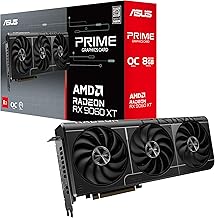
Built on RDNA 4, the RX 9060 XT delivers excellent rasterization performance that frequently matches or edges out the RTX 5060 Ti in traditional gaming. Its biggest advantage is memory: cards like the PowerColor Reaper RX 9060 XT 16GB and ASUS Prime RX 9060 XT offer generous VRAM that keeps textures loading smoothly in demanding modern titles where 8GB cards start to choke.
Ray tracing has historically been AMD’s weak point, and while RDNA 4 closes the gap significantly, NVIDIA still leads in the heaviest ray-traced scenes. For pure raster gaming at 1080p and 1440p, though, the 9060 XT offers superb value and futureproofing thanks to that larger framebuffer.
NVIDIA GeForce RTX 5060 Ti 8GB
The RTX 5060 Ti 8GB leans on NVIDIA’s twin strengths: class-leading ray tracing and DLSS 4, which uses AI to boost frame rates with excellent image quality. Cards like the GIGABYTE WINDFORCE OC, ZOTAC Twin Edge OC, and ASUS Dual OC Edition run cool and quiet on the efficient Blackwell architecture, with PCIe 5.0 and modern display outputs.
The elephant in the room is the 8GB of VRAM. At 1080p it’s usually fine, but some newer games at 1440p with high textures will push past that buffer, forcing quality compromises the 16GB AMD cards avoid. If you rely on DLSS 4 and ray tracing, this NVIDIA card is compelling; if raw memory headroom is your priority, it’s the weaker position.
Head-to-Head: Which Should You Buy?
- For best value and futureproofing: RX 9060 XT, particularly the 16GB models.
- For ray tracing and DLSS 4: RTX 5060 Ti 8GB is the clear winner.
- For 1440p with high textures: the larger-VRAM 9060 XT avoids memory bottlenecks.
- For streaming and content creation: NVIDIA’s encoder and software ecosystem edge it ahead.
- For pure 1080p raster gaming: both are excellent; buy whichever is cheaper.
Frequently Asked Questions
Is 8GB of VRAM enough in 2026?
For 1080p gaming it’s generally adequate, but some modern titles at 1440p with high textures exceed 8GB, forcing lower settings. If you want headroom, a 16GB card like the RX 9060 XT is the safer long-term choice.
Which is better for ray tracing?
The RTX 5060 Ti. NVIDIA retains a lead in heavy ray-traced scenes, and DLSS 4 helps recover the frame rate that ray tracing costs. RDNA 4 narrows the gap but doesn’t fully close it.
Does the AMD card support upscaling too?
Yes. AMD’s FSR technology provides comparable upscaling and is widely supported. DLSS 4 still has an image-quality edge in many titles, but FSR is a strong, improving alternative.
Will either card bottleneck a mid-range CPU?
Both are well matched to modern mid-range processors at 1080p and 1440p. Pair them with a recent six-core or better CPU and you’ll see their full performance without a significant bottleneck.
Final Verdict
For the majority of gamers, the RX 9060 XT, especially in its 16GB trim, is the more sensible purchase, delivering strong raster performance and the VRAM headroom modern games increasingly demand. The RTX 5060 Ti 8GB earns its place for anyone who prioritizes ray tracing, DLSS 4, or NVIDIA’s creator tools. Check current pricing, weigh your feature priorities, and buy the card that matches how you play.