Key takeaways
- 1080p is the easiest to drive, letting even modest graphics cards push very high frame rates for competitive play.
- 1440p asks for a solid mid-range to upper-mid GPU, but delivers a big jump in sharpness while staying achievable at high refresh rates.
- 4K demands a powerful, expensive graphics card to run modern games smoothly, and even then you often trade some frame rate for the extra detail.
Resolution is the single biggest lever on how your games look and how hard your hardware has to work, yet it is one of the most misunderstood choices in PC gaming. Pick a resolution too high for your graphics card and you get a slideshow; pick one too low for your budget and you leave sharpness and immersion on the table. Understanding what 1080p, 1440p, and 4K actually deliver, and what each demands, is the key to buying a monitor and GPU that feel perfectly matched.
This guide compares the three resolutions on clarity, hardware cost, and real-world experience so you can choose the one that fits your rig and your eyes. You will learn why 1440p has become the sweet spot for most gamers, when 4K is worth the strain, and how refresh rate factors into the decision. The 1440p gaming monitors below are the displays we recommend for hitting that sharp, high-refresh sweet spot in 2026.
Our top picks


 ASUS TUF Gaming 27” 1440P HDR Monitor
- Product Group: Personal Computer
- Binding: Personal Computers


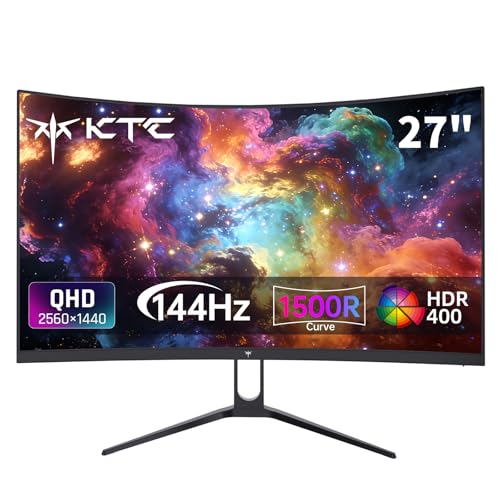 KTC H27S5C 27 Inch Curved Gaming Monitor
- Product Group: Personal Computer
- Binding: Electronics

As an Amazon Associate we earn from qualifying purchases at no extra cost to you. Ratings are shown as listed on Amazon.
⚡ Save on Your Next PC — Amazon Prime
Prime members get fast free shipping on the systems above, plus early access to Prime Day & Black Friday PC deals. New members get a 30-day free trial.
Watch: 1080p vs 1440p vs 4K for Gaming — Video Review
What Each Resolution Actually Means
Resolution counts the pixels on your screen, and more pixels mean a sharper, more detailed image. 1080p (1920×1080) is the long-standing baseline, 1440p (2560×1440) packs in roughly 78 percent more pixels for a noticeably crisper picture, and 4K (3840×2160) quadruples 1080p for stunning detail. But every extra pixel is more work for your graphics card to draw. The art of choosing is balancing that visual gain against the horsepower, and the frame rates, you are willing to trade for it.
The Hardware Cost of Each Step Up
- 1080p is the easiest to drive, letting even modest graphics cards push very high frame rates for competitive play.
- 1440p asks for a solid mid-range to upper-mid GPU, but delivers a big jump in sharpness while staying achievable at high refresh rates.
- 4K demands a powerful, expensive graphics card to run modern games smoothly, and even then you often trade some frame rate for the extra detail.
Why 1440p Is the Sweet Spot
For most gamers in 2026, 1440p hits the ideal balance of sharpness, frame rate, and cost. It looks dramatically crisper than 1080p without the punishing hardware demands of 4K, and a wide range of monitors, from the Samsung Odyssey G5 and Acer Nitro to the ASUS TUF Gaming VG27AQ3A, pair a QHD panel with a fast 180Hz refresh rate. That combination of resolution and speed is why so many enthusiasts land on 1440p: it is the resolution that feels like an upgrade in every way without requiring a flagship GPU.
When 4K Is Worth It
4K makes the most sense for players who prize visual fidelity over raw frame rate, or who game on large screens where 1080p and even 1440p start to look soft. If you play story-driven, cinematic titles and own a powerful graphics card, the detail is genuinely breathtaking. But for fast, competitive shooters where high frame rates win games, the extra pixels are usually the wrong trade. Be honest about the kind of games you play before committing to 4K and the pricey GPU it requires.
Don’t Forget Refresh Rate and Panel Type
Resolution is only half the story; how many frames per second your monitor shows matters just as much for how a game feels. A 1440p display at 180Hz, like the LG UltraGear or ASUS ROG XG27ACS, feels dramatically smoother than the same resolution at 60Hz. Panel type matters too: modern IPS and QD-OLED panels, such as the Samsung Odyssey OLED G6, deliver richer color and better viewing angles. The best monitor pairs a resolution your GPU can drive with a high refresh rate and a quality panel.
Tips
- Choose your resolution based on the graphics card you own or plan to buy, not the other way around.
- Pick 1440p at 180Hz for the best all-round balance of sharpness and smoothness in 2026.
- Reserve 4K for powerful rigs and cinematic, single-player games where fidelity beats frame rate.
- Do not overlook refresh rate and panel type; they shape the feel of a game as much as resolution does.
Frequently Asked Questions
Is 1440p worth it over 1080p?
For most gamers, yes. The jump to 1440p delivers a big boost in sharpness, and monitors like the Samsung Odyssey G5 or ASUS TUF Gaming pair it with a fast refresh rate. As long as your GPU can drive it, 1440p is the more satisfying choice.
Do I need an expensive GPU for 4K gaming?
Generally yes. 4K quadruples the pixels of 1080p, so running modern games smoothly requires a powerful, higher-cost graphics card. If your budget is limited, 1440p offers a far better balance of looks and performance.
Which resolution is best for competitive gaming?
Competitive players often favor 1080p or 1440p because they let the GPU push very high frame rates, which matter more than fidelity in fast shooters. A high-refresh 1440p monitor like the LG UltraGear is a popular middle ground.
Does refresh rate matter more than resolution?
Neither wins outright; they work together. A sharp resolution with a low refresh rate feels sluggish, while a fast refresh rate on a soft image looks dated. A 1440p, 180Hz monitor balances both beautifully.
Conclusion
Choosing between 1080p, 1440p, and 4K comes down to matching resolution to your graphics card and the games you play. For most people in 2026, a 1440p monitor at a high refresh rate is the clear sweet spot, delivering a striking upgrade in sharpness without demanding a flagship GPU. Decide your priorities, pair your display and card sensibly, and every session will look and feel exactly as good as your hardware allows.