Shopping for a 4K gaming monitor under $500 in 2026 is genuinely confusing. Panel specs have improved so quickly that a display selling for $450 today can outperform something that cost twice as much three years ago — but the market is also crowded with panels that hit “4K 160Hz” on the spec sheet while cutting corners on color accuracy, backlight uniformity, or response time. Add in overlapping brand naming (Odyssey G5 vs. G7, TUF vs. ROG) and it’s easy to overpay for features you’ll never use, or underpay and end up with a monitor that smears in fast motion.
This guide cuts through it. We’ve focused on 4K panels that realistically land at or under $500 at street pricing, with an emphasis on the specs that actually change how a game feels: refresh rate, pixel response, HDR competence, and connectivity. Below you’ll find our current picks, a short buying checklist, honest reviews of each display, and answers to the questions we get asked most.
Our top picks
 Acer Nitro 27in 4K 3840x2160 IPS 160Hz
- Quality Visuals: The VG270K 27" IPS monitor with…
- AMD FreeSync Premium Technology: Say “goodbye” to stuttering…
- Quick Refresh Rate: Different content has different refresh…
 Samsung 27" Odyssey G5
- QHD Resolution (2560 x 1440) has 1.7 times…
- HDR10 provides brighter highlights and nuanced shadow for…
- The 180Hz refresh rate minimizes lag for gameplay…
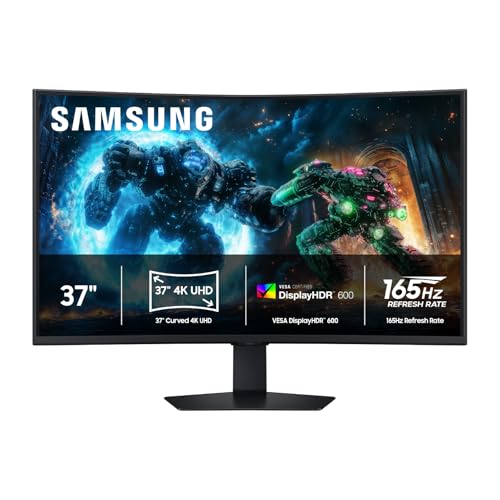 Samsung 37” Odyssey G7
- Samsung’s 37” 4K UHD Odyssey G7 Curved Gaming…
- 37” 1000R curved display with 4K UHD resolution…
- VESA DisplayHDR 600 delivers more contrast, with deeper…
| Product | Key specs | |
|---|---|---|
| Acer Nitro 27in 4K 3840x2160 IPS 160Hz | Quality Visuals: The VG270K 27" IPS monitor with… AMD FreeSync Premium Technology: Say “goodbye” to stuttering… Quick Refresh Rate: Different content has different refresh… | Check price |
| Samsung 27" Odyssey G5 | QHD Resolution (2560 x 1440) has 1.7 times… HDR10 provides brighter highlights and nuanced shadow for… The 180Hz refresh rate minimizes lag for gameplay… | Check price |
| Samsung 37” Odyssey G7 | Samsung’s 37” 4K UHD Odyssey G7 Curved Gaming… 37” 1000R curved display with 4K UHD resolution… VESA DisplayHDR 600 delivers more contrast, with deeper… | Check price |
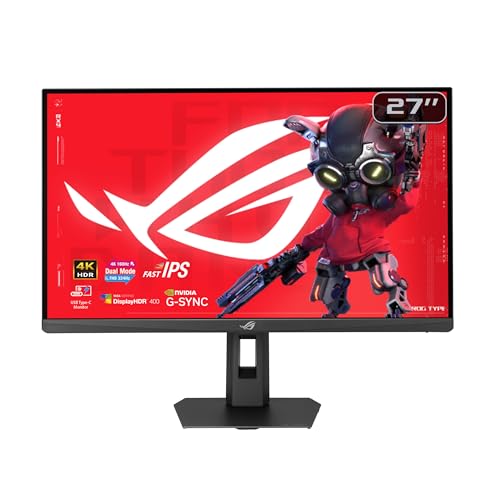 ASUS ROG XG27UCSR 27 Inch 4K 162Hz ASUS ROG XG27UCSR 27 Inch 4K 162Hz | Dual Mode Display Technology: 27-inch 4K (3840 x… Ultra-Fast Response Time: ASUS Fast IPS technology enables… Enhanced Visual Clarity: ASUS Smart Pixel technology enhances… | Check price |
 Dell 27 Monitor S2725QS Dell 27 Monitor S2725QS | Improved ComfortView Plus: Reduces harmful blue light emissions… Refresh rate: A smooth, tear-free experience with AMD… Vivid colors: Immerse yourself in breathtaking 4K visuals… | Check price |
 ASUS TUF Gaming 27” 4K HDR Monitor ASUS TUF Gaming 27” 4K HDR Monitor | 27-inch 4K Ultra HD Display: Features 3840 x… ASUS Extreme Low Motion Blur Sync Technology: ELMB… Advanced Synchronization Technologies: NVIDIA G-SYNC Compatible, AMD FreeSync… | Check price |
 CRUA 32" 4K UHD 160Hz Curved Gaming CRUA 32" 4K UHD 160Hz Curved Gaming | 4K Curved Monitor: This 32inch 4K UHD curved… Smooth High Refresh: Enjoy fluid visuals with a… Vivid Color & RGB: With 120% sRGB color… | Check price |
 CRUA 32" 4K UHD 160Hz Curved Gaming CRUA 32" 4K UHD 160Hz Curved Gaming | 32inch 4K Curved Display: Enjoy breathtaking clarity and… 160Hz Refresh Rate + AMD FreeSync: Dominate every… 120% sRGB Color Accuracy & Built-in Speakers: Featuring… | Check price |
As an Amazon Associate we earn from qualifying purchases at no extra cost to you.
⚡ Save on Your Next PC — Amazon Prime
Prime members get fast free shipping on the systems above, plus early access to Prime Day & Black Friday PC deals. New members get a 30-day free trial.
Watch: Best 4K Monitor Under $500 — Video Review
How to Choose 4K Monitor Under $500
- Refresh rate vs. resolution: At this budget, 4K at 120–165Hz is the realistic sweet spot. Anything advertising much higher refresh at 4K for under $500 is usually relying on a dual-mode trick that drops resolution to hit the number.
- Panel type: IPS is the safe default here — better color and viewing angles than VA, with far better motion handling than budget VA panels. VA is worth considering only if you want deep contrast for single-player and cinematic play.
- Real response time: Ignore the “1ms” marketing figure and look for a monitor with a well-tuned overdrive setting. Poor overdrive causes overshoot and inverse ghosting, which is far more visible in gameplay than a fraction of a millisecond.
- HDR expectations: Under $500 you’re getting HDR400-class performance at best, which is a modest brightness boost rather than true HDR. Treat it as a bonus, not a buying reason, and don’t pay a premium for the badge.
- Ports and adaptive sync: Confirm DisplayPort 1.4 (or HDMI 2.1 for consoles) and verified FreeSync Premium or G-SYNC Compatible support. USB-C with power delivery is a genuine convenience upgrade if you dock a laptop, but it typically pushes the price toward the top of this bracket.
The Best Picks Reviewed
Acer Nitro VG270K V4
This is the value benchmark for 4K gaming right now: a 27-inch IPS panel at 160Hz with a dual-mode option that drops to 1080p at 320Hz for competitive shooters. Color accuracy out of the box is respectable and motion clarity is strong for the price, making it the easiest recommendation for most buyers under $500.
ASUS ROG XG27UCSR
The XG27UCSR is the most complete package here, pairing a fast 4K 162Hz IPS panel with USB-C connectivity and G-SYNC compatibility. It sits at the very top of this budget, but the overdrive tuning and build quality justify the stretch if you want a display that won’t need replacing for years.
ASUS TUF Gaming VG27UQ1A
A slightly more affordable ROG alternative, the VG27UQ1A delivers 4K at 160Hz with 95% DCI-P3 coverage and ASUS’s Extreme Low Motion Blur Sync for cleaner fast motion. The DisplayWidget software and three-year warranty add real value, and colors are vibrant enough for content work as well as gaming.
Dell S2725QS
Dell’s S2725QS is the sensible pick for mixed-use setups: 4K IPS at 120Hz with FreeSync Premium, a clean design, and Dell’s usually excellent factory calibration. It’s not the fastest panel on this list, but for console gaming, productivity, and general desktop use it’s an outstanding all-rounder that typically undercuts the competition on price.
Samsung Odyssey G7 (G75F) 37″
If you want scale, the 37-inch curved Odyssey G7 delivers 4K UHD across a genuinely immersive canvas with strong VA contrast for atmospheric single-player games. Availability at under $500 depends heavily on sales pricing, so it’s worth watching for discounts rather than paying full retail.
Frequently Asked Questions
Is 4K worth it under $500, or should I buy a 1440p monitor instead?
If your GPU can drive it, 4K is now worth it at this price. That said, a strong 1440p panel like the Samsung Odyssey G5 (G51F) is still the smarter buy for competitive players on mid-range hardware, since it delivers much higher frame rates for the same money.
What GPU do I need for 4K gaming?
For high settings at 60fps or above, plan on a current-generation upper-midrange card or better. Upscaling technologies like DLSS and FSR meaningfully lower that bar, and most modern titles look excellent rendering internally at 1440p and upscaling to 4K.
Do these monitors work well with PS5 and Xbox Series X?
Yes, provided the model has HDMI 2.1 — that’s what enables 4K at 120Hz on console. The Dell S2725QS and the ASUS options are all solid console companions; always check the specific port spec before buying.
Is 27 inches too small for 4K?
Not at all. At 27 inches, 4K produces around 163 PPI, which delivers exceptionally sharp text and image detail. You’ll likely want display scaling set to 125–150% in Windows for comfortable desktop use.
Final Thoughts
For most gamers, the Acer Nitro VG270K V4 is the best balance of speed, image quality, and price in this bracket, with its dual-mode 320Hz option adding genuine competitive flexibility. If you can stretch to the top of the budget, the ASUS ROG XG27UCSR is the more refined display and the better long-term investment, while the Dell S2725QS remains the smartest choice for anyone splitting time between gaming, console play, and everyday productivity.