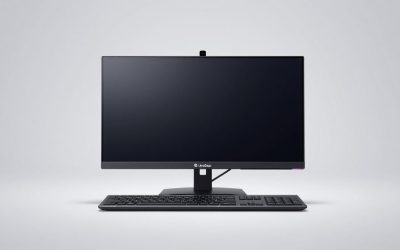
OLED has gone from a luxury curiosity to the enthusiast default, and 2026 is the year it becomes genuinely attainable. Perfect blacks, near-instant pixel response, and eye-popping color make an OLED gaming monitor feel like a generational leap the first time you see a dark scene render without a hint of backlight bloom.
The trade-off is that OLED comes in several flavors, refresh rates now stretch past 240Hz, and panel sizes range from compact 27-inch QHD screens to sprawling 32-inch 4K displays. We rounded up the standout QD-OLED and WOLED models to help you match the right panel to your GPU, your desk, and your budget.
Our top picks
 Acer Predator 26.5in QHD 2560x1440 QD-OLED 240Hz
- OLED Makes All The Difference: With a display…
- AMD FreeSync Premium Technology: Say “goodbye” to stuttering…
- Fast and Furious: If you want seamless gameplay…
 LG 27GX704A-B 27-inch Ultragear QHD
240Hz OLED panel with 0.03ms response suits competitive play
Triple UL certification targets anti-glare and low blue light
DisplayHDR TrueBlack 400 adds deep contrast in dark scenes
At nearly 16 pounds, it needs a sturdy stand or mount
OLED panels need care to avoid static-image burn-in
 Samsung 27" Odyssey OLED G6
- Samsung’s 27” Odyssey OLED G6 Gaming Monitor is…
- OLED Safeguard technology supports performance by actively helping…
- Glare Free Technology keeps screen clear of reflection…
| Product | Key specs | |
|---|---|---|
| Acer Predator 26.5in QHD 2560x1440 QD-OLED 240Hz | OLED Makes All The Difference: With a display… AMD FreeSync Premium Technology: Say “goodbye” to stuttering… Fast and Furious: If you want seamless gameplay… | Check price |
| LG 27GX704A-B 27-inch Ultragear QHD | Check price | |
| Samsung 27" Odyssey OLED G6 | Samsung’s 27” Odyssey OLED G6 Gaming Monitor is… OLED Safeguard technology supports performance by actively helping… Glare Free Technology keeps screen clear of reflection… | Check price |
 Samsung 27” Odyssey OLED G5 Samsung 27” Odyssey OLED G5 | Check price | |
 ASUS ROG PG32UCDM 32 Inch 4K 240Hz ASUS ROG PG32UCDM 32 Inch 4K 240Hz | Immersive 4K QD-OLED Display: 32-inch 4K (3840 x… Advanced Heat Management System: Highly efficient custom heatsink,… Exceptional HDR Performance: VESA DisplayHDR 400 True Black… | Check price |
 Dell 34 Monitor S3425DW Dell 34 Monitor S3425DW | Improved ComfortView Plus: Reduces harmful blue light emissions… Refresh rate: A smooth, tear-free experience with AMD… Vivid colors: Enjoy vibrant, true-to-life colors with 99%… | Check price |
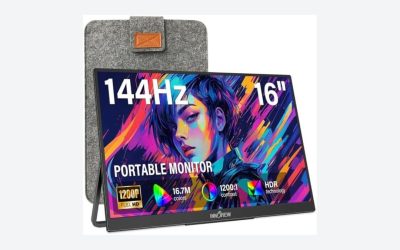
 UPERFECT OLED Portable Monitor Touchscreen UPERFECT OLED Portable Monitor Touchscreen | Check price | |
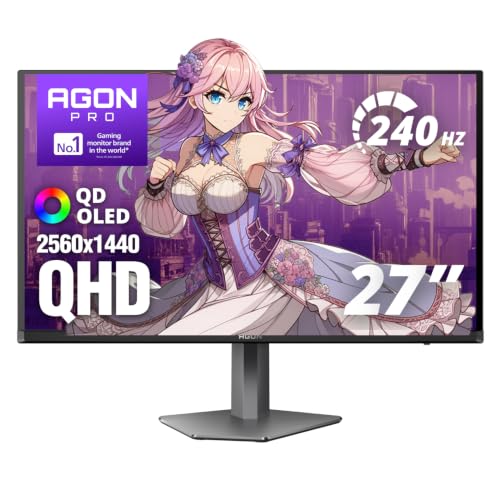 AOC Agon Pro 27 Inch Gaming Monitor AOC Agon Pro 27 Inch Gaming Monitor | Up to 280Hz refresh rate, 0.03ms GTG response… The self-luminous OLED panel makes everything you love… 26.5-inch AGON PRO tournament gaming monitor with 2K… | Check price |
As an Amazon Associate we earn from qualifying purchases at no extra cost to you.
⚡ Save on Your Next PC — Amazon Prime
Prime members get fast free shipping on the systems above, plus early access to Prime Day & Black Friday PC deals. New members get a 30-day free trial.
Watch: Best OLED Monitor 2026 — Video Review
How to Choose an OLED Monitor
- Panel type: QD-OLED delivers punchier color and brightness, while WOLED often has a slight edge in text clarity. Both crush the blacks of any LCD, so pick based on how you use the screen.
- Resolution vs. refresh: A 27-inch 1440p panel at 240Hz is the competitive sweet spot, whereas 32-inch 4K prioritizes visual fidelity for single-player and creative work. Match this to your GPU horsepower.
- Refresh rate: Even 180Hz feels superb, but 240Hz and beyond adds smoothness for fast shooters. OLED’s 0.03ms response means motion stays razor-sharp regardless.
- HDR performance: Look for VESA DisplayHDR TrueBlack certification. OLED’s per-pixel dimming makes HDR content look dramatically better than on edge-lit LCDs.
- Burn-in protection: Modern panels include pixel-shift and safeguard features plus generous warranties. Vary your content and enable the built-in care tools and you are unlikely to see issues.
The Best OLED Monitors Reviewed
LG UltraGear 27GX704A-B
LG’s 27-inch UltraGear pairs a QHD WOLED panel with a blistering 240Hz refresh and 0.03ms response, plus G-Sync compatibility and FreeSync Premium Pro. DisplayHDR TrueBlack 400 and HDMI 2.1 make it equally at home with a PC or a console. For most competitive players this is the ideal balance of speed, size, and price.
Acer Predator X27U W1
The Predator X27U brings a 26.5-inch QD-OLED panel to the table with 240Hz, 99% DCI-P3 coverage, and both HDMI 2.1 and DisplayPort inputs. The ergonomic stand and built-in speaker add convenience, while the QD-OLED color volume makes games and movies pop. It is a premium all-rounder that feels every bit its price.
ASUS ROG PG32UCDM
If you want the flagship experience, the ROG PG32UCDM is a 32-inch 4K QD-OLED running at 240Hz with a custom heatsink and USB-C 90W power delivery. True 10-bit color, 99% DCI-P3, and a graphene film for heat management make this the dream display for players with a high-end GPU who refuse to compromise on resolution or speed.
Samsung Odyssey OLED G6 (G61SH)
Samsung’s Odyssey OLED G6 is a 27-inch QD-OLED QHD panel at 240Hz with a glare-free coating that tames reflections better than most OLEDs. Pantone validation, HDR10, and a height-adjustable stand round out a polished package, and the three-year warranty offers real peace of mind against burn-in.
AOC Agon Pro AG276QZD2
The AOC Agon Pro proves QD-OLED value is here, delivering a 27-inch QHD panel that climbs to 280Hz with 0.03ms response. HDR TrueBlack 400, a height-adjustable VESA-ready stand, built-in speakers, and a four-year warranty make it one of the smartest picks for players who want cutting-edge refresh without a flagship price.
Frequently Asked Questions
Is OLED burn-in still a concern in 2026?
For typical mixed use it is a minimal risk. Current monitors include pixel-shift, logo dimming, and refresh routines, and manufacturers now back panels with multi-year warranties that cover burn-in specifically.
What is the difference between QD-OLED and WOLED?
QD-OLED uses quantum dots for brighter, more saturated color, while WOLED adds a white subpixel that can improve full-screen brightness and text sharpness. Both offer the perfect blacks that define OLED.
Do I need a powerful GPU for these monitors?
For a 1440p 240Hz panel a strong mid-to-high-end card keeps frame rates high. A 32-inch 4K OLED demands a top-tier GPU to drive its resolution and refresh together, so budget accordingly.
Should I choose 27-inch QHD or 32-inch 4K?
Competitive players usually prefer 27-inch QHD for its higher achievable frame rates and pixel density, while immersion-focused and creative users lean toward 32-inch 4K for the extra detail and screen space.
Final Thoughts
Heading into 2026 the LG UltraGear 27GX704A-B is our default recommendation for its ideal blend of speed, size, and value, while the ASUS ROG PG32UCDM is the no-compromise flagship for 4K enthusiasts. The AOC Agon Pro makes QD-OLED remarkably affordable, and Samsung’s G6 backs its excellent panel with a reassuring warranty. Whichever you choose, once you experience OLED’s perfect blacks there is no going back to LCD.